

close
Choose Your Site
Global
Social Media
Views: 0 Author: Site Editor Publish Time: 2026-02-16 Origin: Site


Determining the production capacity of a puff pastry production line is crucial for businesses aiming to meet demand while maintaining efficiency. The right capacity ensures that your production line can handle the volume of goods needed without overextending resources or underperforming. For small businesses, a low-capacity line may suffice, while larger operations or those with future growth plans require higher capacity to avoid bottlenecks. Understanding production capacity also impacts operational decisions such as labor requirements, energy consumption, and the scale of your investment. By matching the capacity of your production line to market demand, businesses can achieve optimal performance, reduce waste, and ensure the ability to scale as their needs grow.
The type of production line plays a significant role in determining its capacity. Small-scale production lines are ideal for small bakeries or artisanal producers, handling lower volumes with more flexibility. These lines are typically easier to set up and manage but are limited in throughput. On the other hand, high-capacity lines are designed for large-scale operations and can handle much higher volumes of production. They are equipped with larger machines, higher automation, and greater throughput, making them suitable for industrial production.
The automation level of a puff pastry production line significantly affects its capacity. Fully automated lines are capable of handling a larger volume of products in less time due to minimal human intervention. These systems can run continuously, increasing production speed and reducing labor costs. Semi-automated lines, while more affordable, require more manual labor and are generally slower, which limits their production capacity. Automation allows for faster processing, better consistency, and higher output, making it ideal for businesses with high demand.
The type of raw materials used and the complexity of the product also impact production capacity. Simple products like basic puff pastry may be produced at a higher rate, while more complex pastries, such as those with intricate fillings or custom shapes, require additional processing time. Additionally, some ingredients may require more time or careful handling, affecting the overall speed of production. Product variations, such as changing sizes or shapes, may require adjustments to the production line, which can impact the overall capacity.
Small-scale production lines are designed for businesses with lower production demands. These lines are ideal for small bakeries, artisanal producers, or startups that require flexibility and a smaller footprint. Typically, these lines have a capacity ranging from a few dozen to a few hundred products per hour. While not suitable for large-scale operations, small-scale lines offer the advantage of customization and ease of operation, making them perfect for businesses with moderate production needs or those just starting out.
Medium-capacity production lines strike a balance between efficiency and flexibility, making them suitable for medium-sized businesses. These lines are designed to handle moderate volumes, typically producing several hundred to a thousand products per hour. They are ideal for bakeries that are expanding their operations or looking to meet growing customer demand without investing in an industrial-scale system. Medium-capacity lines often allow for increased automation while still offering flexibility in product sizes and shapes.
High-capacity production lines are tailored for large-scale and industrial operations that need to produce large volumes of puff pastry products. These systems can process thousands of units per hour, making them ideal for businesses with high demand and the need for continuous production. High-capacity lines come equipped with advanced automation, robust components, and fast production speeds, enabling businesses to meet bulk orders and supply larger markets. These lines are often more complex and require higher initial investment, but they significantly improve productivity and efficiency for high-volume manufacturers.
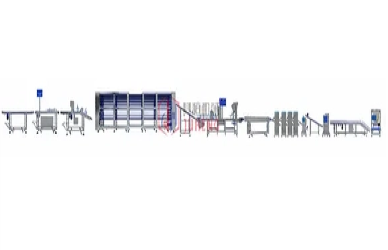
To determine the right production capacity, businesses must assess their current market demand and project future growth. Start by analyzing historical sales data and forecasting demand based on market trends, seasonal variations, and potential new customers. Factor in the growth projections over the next 1–5 years to avoid under- or overestimating your needs. It's essential to consider not only the volume of puff pastry products needed today but also the expected increase in production as your business expands. This approach helps to ensure that your production line can handle both current and future demand without frequent upgrades.
Choosing a scalable production line offers flexibility and long-term value. Scalable lines can be adjusted or expanded as production needs increase, making them an ideal choice for businesses with growth plans. By selecting equipment that can grow with your business, you avoid the risk of outgrowing your production capacity too quickly. Scalable lines also provide cost efficiency, as businesses can start with a system that meets their current needs and gradually invest in upgrades, rather than making a large upfront investment in equipment that may exceed their needs. This adaptability ensures that your production capacity aligns with your evolving business demands, maximizing both productivity and return on investment.
High-capacity production lines are designed for continuous, large-scale operation, which often leads to increased maintenance requirements. The heavy use of machinery, combined with the stress of high-volume production, can result in more wear and tear on components. To ensure smooth operation, businesses must invest in regular maintenance and timely repairs, which can include scheduled check-ups, parts replacement, and system calibration. Without proper upkeep, the risk of breakdowns increases, leading to downtime and higher repair costs. It is essential to plan for these maintenance needs to avoid disruptions in production.
High-capacity systems tend to consume significantly more energy due to their larger size, faster speeds, and continuous operation. This can lead to higher operational costs, particularly in industries where energy consumption is a major expense. Businesses should carefully evaluate the energy efficiency of high-capacity systems to manage electricity costs. Additionally, other operational costs such as raw materials, labor, and equipment wear and tear should be factored in when assessing the overall cost-effectiveness of high-capacity lines. Although these systems offer substantial productivity gains, the financial impact of energy consumption and other operational expenses must be carefully considered.
To determine the right capacity, assess your current production needs by analyzing historical sales data and considering market trends. Factor in future growth projections and seasonal demand fluctuations. It's important to choose a line that can scale as your business grows without exceeding your current needs. By forecasting demand and assessing future production volumes, you can avoid over- or under-investing in equipment, ensuring a well-balanced and cost-effective production setup.
Fully automated lines can significantly increase output by reducing manual labor, allowing continuous operation and faster production speeds. These systems ensure consistent product quality, reduce human error, and boost overall capacity. On the other hand, semi-automated lines require manual intervention at some stages, leading to slower production speeds and lower overall output. While semi-automated lines are more affordable, they may not be suitable for high-volume production demands, making fully automated systems better for businesses aiming for higher efficiency and volume.
Yes, most puff pastry production lines are designed with flexibility in mind, allowing adjustments for various product types. These lines can be customized to produce different sizes, shapes, or styles of pastries, such as croissants, danishes, or puff pastry sheets. Adjustments can include changes in cutting mechanisms, molding tools, and rolling settings to accommodate a wide range of products. This flexibility allows businesses to meet diverse customer demands and respond to seasonal variations without investing in multiple production lines.
When upgrading to a high-capacity line, consider factors like maintenance requirements, energy consumption, and operational costs. High-capacity systems often require more frequent maintenance and are more expensive to run due to higher energy consumption. It’s important to evaluate long-term operational costs, including labor, raw materials, and energy efficiency, to ensure the upgrade is financially viable. Additionally, assess the scalability of the system to ensure it can accommodate future growth, and ensure the system has the flexibility to handle different products or adaptations in demand.
Selecting the right production capacity for your puff pastry production line is essential for aligning your equipment with both current demand and long-term business goals. It’s crucial to assess not only the immediate needs of your business but also to forecast growth and market fluctuations to avoid under or over-investing. By choosing the appropriate production capacity, you ensure that your line operates efficiently, meets demand, and remains scalable for future growth. A well-chosen production line will help you balance cost efficiency, product quality, and flexibility, ultimately contributing to your business’s sustainability and success. Carefully consider factors like market trends, expected growth, and long-term operational costs to make a decision that supports both your current needs and future ambitions.


