

close
Choose Your Site
Global
Social Media
Views: 0 Author: Site Editor Publish Time: 2026-02-17 Origin: Site


Laminated dough is a key component in puff pastry production, characterized by its multiple layers of dough and fat, which create the signature flaky, crisp texture. This dough is essential for producing various baked goods, such as croissants, danishes, and puff pastry sheets. The process of lamination involves folding and rolling the dough repeatedly to create thin layers, which expand and puff up during baking. A puff pastry production line plays a critical role in efficiently processing laminated dough, ensuring consistent layering and texture. These lines are equipped with specialized machinery, such as adjustable rollers and sheeters, which control the thickness and uniformity of the dough. Additionally, advanced temperature control systems help maintain the ideal dough consistency, allowing for precise lamination and the production of high-quality puff pastry products.
Laminated dough is a type of dough that is layered with butter or fat through a series of folding and rolling processes. Unlike regular dough, which is mixed and kneaded to develop gluten, laminated dough is specifically designed to create thin layers of dough and fat. The layers puff up when baked, giving the pastry its characteristic flakiness and crisp texture. In contrast, regular dough does not involve this layering process and results in a denser, less flaky product.
The process of creating laminated dough begins with incorporating butter (or other fats) into the dough, typically in the form of a block or sheet. The dough is then repeatedly folded and rolled out in a process known as “turns.” Each turn involves rolling the dough out into a thin sheet and folding it over itself, which traps the butter between layers of dough. This is done multiple times (usually 3–6 turns) to build up many layers. The result is dough with thin layers of butter that expand during baking, creating a light, flaky texture. Proper execution of this process is critical to achieving the perfect puff pastry, where the layers separate and become crisp when baked.
Puff pastry production lines are equipped with specialized machinery designed to efficiently handle laminated dough. The process begins with a dough sheeter, which flattens the dough to a uniform thickness. After that, a butter injection system or butter spreader applies a controlled amount of butter or fat onto the dough. This is followed by a series of rollers and folding machines that execute the critical steps of folding and rolling the dough. Automated systems ensure the precise application of butter between layers and guarantee even distribution throughout the dough. Advanced technology, including temperature control units, ensures that the dough and butter maintain the right consistency, preventing the butter from melting or absorbing into the dough too early.
To achieve consistent lamination, puff pastry production lines are designed with several key features:
Adjustable Rollers: These rollers are crucial for maintaining the correct dough thickness and ensuring that each layer is evenly formed. Adjustable rollers allow the dough to be rolled to the precise thickness required for uniform layering.
Precise Folding Mechanisms: Automatic folding machines ensure the dough is folded evenly, trapping the butter between layers with the right amount of pressure. This results in layers that are consistently distributed and aligned.
Integrated Temperature Control: Proper temperature control during the lamination process helps maintain the dough’s consistency, ensuring that the butter does not melt too quickly and the dough stays pliable enough to fold correctly.
Precision in dough folding and rolling is crucial for creating the perfect puff pastry. Too much pressure during the folding process can cause the layers to merge, while too little pressure may result in uneven layers. Consistent rolling ensures that each layer of dough is uniform, which directly affects the final product’s texture. Automated systems are designed to execute these actions with exacting precision, helping to avoid human error and achieve the desired result: a flaky, light, and consistent puff pastry. The overall success of the lamination process hinges on the precise control over each step of folding, rolling, and butter distribution, making these features essential for high-quality puff pastry production.
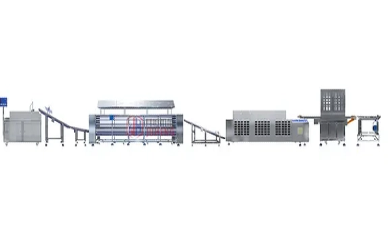
Laminated dough, with its multiple layers of dough and butter, presents several challenges during production:
Uneven Layering: One of the most common issues is uneven distribution of butter or dough during the lamination process, which can lead to inconsistent layers. This affects the final texture and quality of the puff pastry, with some layers being too thick or too thin.
Dough Sticking: As dough with many layers is rolled and folded, there is a risk of the layers sticking together or to the rollers, which can result in uneven lamination or even tearing of the dough. This can cause a loss of the desired flaky texture and ruin the final product.
Fat Leakage: Excessive pressure during folding or rolling can lead to butter leaking out of the dough layers, causing uneven puffing and a greasy texture in the finished product.
Modern puff pastry production lines are designed with advanced technology to address these common issues:
Precision Rollers and Sheeters: Automated rollers are equipped with precise adjustments to control the thickness of the dough and ensure consistent butter distribution. These machines reduce the chances of uneven layering and ensure that the dough is rolled to the correct thickness throughout the entire process.
Non-stick Surfaces: To prevent dough sticking, many production lines use non-stick rollers and surfaces treated with special coatings. These prevent the dough from adhering to the machinery and allow for smoother handling of the laminated dough.
Controlled Folding Pressure: Modern folding machines use consistent, controlled pressure to create uniform layers without crushing the dough. This ensures that the layers remain intact, preventing butter leakage and maintaining a flaky, airy texture.
Temperature Control Systems: Temperature-controlled environments help maintain the dough’s consistency and prevent the butter from melting too quickly. These systems ensure that the dough remains cold during the lamination process, preventing the fat from becoming too soft and making the layers easier to handle.
Adjustable rollers and sheeters are essential for ensuring consistent dough thickness throughout the lamination process. These machines allow for precise control over the thickness of the dough, ensuring that each layer is uniform. By adjusting the roller pressure and gap, production lines can produce dough sheets with the right consistency, preventing overly thick or thin areas that could lead to uneven layering. The ability to adjust the settings on rollers and sheeters ensures that the layers remain consistent, which is crucial for achieving the perfect puff pastry texture.
Temperature control is critical in maintaining dough consistency and ensuring that the butter does not melt prematurely during the lamination process. Cold dough is key to creating distinct layers of fat and dough that expand and puff during baking. Modern production lines are equipped with temperature-controlled systems that regulate the environment and ensure the dough stays at an optimal temperature throughout the process. This helps maintain the flakiness and texture of the puff pastry, while also preventing issues like butter leakage or dough sticking to the machinery.
To maintain the integrity of the laminated layers, advanced cutting and shaping tools are integrated into the production line. These tools ensure that the dough is cut and shaped precisely without disturbing the delicate layers. Whether the dough is being cut into specific shapes, sized for baking trays, or molded for various pastry types, the equipment is designed to preserve the laminated structure. The cutting tools work with minimal pressure, preventing the layers from merging and ensuring that the finished product retains its desired flakiness and structure.
Yes, puff pastry production lines use advanced rollers and sheeters to achieve consistent layering. These machines ensure even dough thickness and precise butter distribution, creating multiple layers in the laminated dough for a perfect puff pastry texture.
Key features include adjustable rollers for uniform dough thickness, temperature control systems to maintain dough consistency, and advanced shaping tools that preserve the layers during cutting and molding. These features ensure high-quality laminated dough production.
Maintaining the right temperature is essential for dough consistency. Temperature control ensures that the dough remains firm and the butter doesn’t melt too quickly, preventing it from absorbing into the dough and ensuring that distinct layers are formed during the lamination process.
Common challenges include uneven layers and dough sticking. Modern production lines address these issues by using precise rollers, temperature control, and non-stick surfaces, ensuring consistent layering and smooth handling of the dough throughout the process.
Puff pastry production lines are specifically designed to handle laminated dough with precision, ensuring the creation of consistent, high-quality puff pastry products. With advanced features like adjustable rollers, temperature control systems, and cutting and shaping tools, these lines provide the necessary technology to maintain uniform dough thickness, prevent dough sticking, and preserve the delicate layers that are crucial for achieving the perfect flaky texture. By automating and optimizing the lamination process, modern production lines not only enhance efficiency but also improve product consistency, making them an invaluable asset for bakeries and manufacturers aiming to produce large quantities of high-quality pastries. With these capabilities, puff pastry production lines offer a reliable solution for businesses seeking to meet customer demand while maintaining top-tier product quality.


