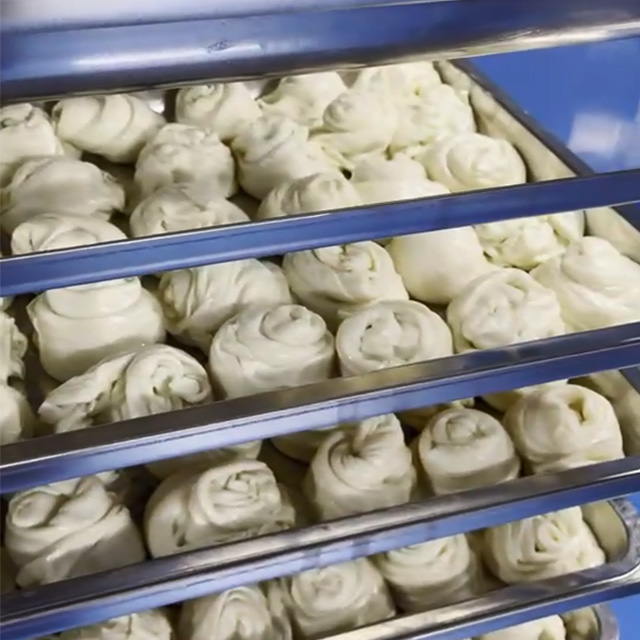
Layered Paratha Production Line
Mode | JHSZB |
| Dimension | 31118*1850*1648 (mm) |
| Capacity | 1200kg/h |
| Power specification | 380V, 50HZ, 3PH, 21KW |
| Material | SUS304, PE
|
| Finished product | Unbaked, frozen |
| Product size | Adjustable |
Product Overview
The Juheng Fully Automatic Layered Paratha Prouction Line begins with a dough chunker that portions bulk dough into consistent pieces. These pass through initial shaping, satellite roller thinning, and precision stretching into an ultra-thin film. An oil applicator deposits an even layer across the surface — the essential step that creates the oiled interfaces responsible for the pancake's signature flaky, hand-grabbable layers. The oiled sheet is then rolled into a continuous dough log, relaxed on a multi-tier conveyor, cut into individual sections, and spiral-coiled into dough balls.
At this point, the line diverges from semi-automatic configurations. The coiled dough balls enter a second multi-tier relaxing stage — a critical step that allows the gluten to fully rest after coiling, ensuring optimal texture in the finished product. After relaxing, a robotic arm picks each dough ball and places it precisely onto the press infeed. The press then flattens the ball into a uniform disc while simultaneously applying food-grade protective film to both surfaces.
The film-covered discs proceed directly into an integrated freezing tunnel, emerging frozen and ready for manual sorting and packaging.
This line is the definitive solution for large-scale hand-grabbed pancake manufacturers, frozen food exporters, and central kitchen operations that require maximum throughput with minimum labor. Every food-contact surface is SUS304 stainless steel, and the line is CE certified for global export. Custom layout engineering accommodates facility-specific space constraints and production flow requirements.

Product Features
Production process
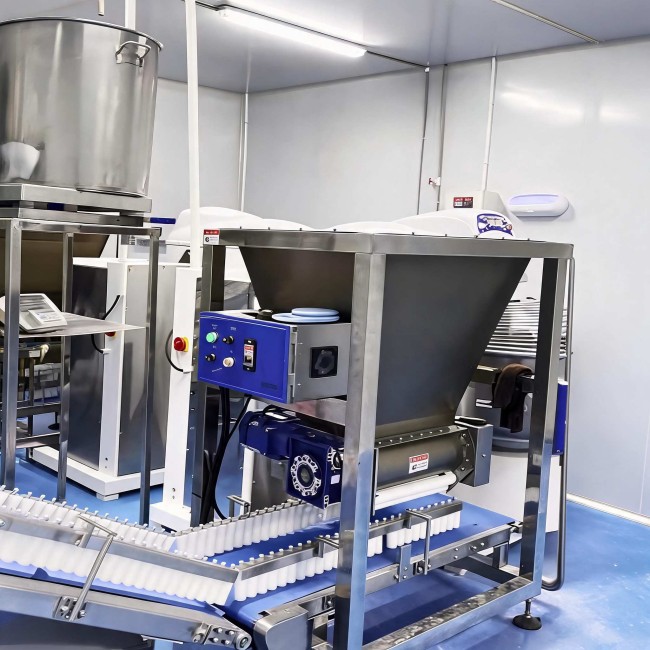
Dough Chunker & Initial Shaping
Bulk dough from the mixer enters the chunker, which portions it into consistent, uniform pieces by weight. Each piece then passes through an initial shaping station that pre-forms it into an even thickness — the essential first step that ensures uniformity through all downstream sheeting and stretching stages.
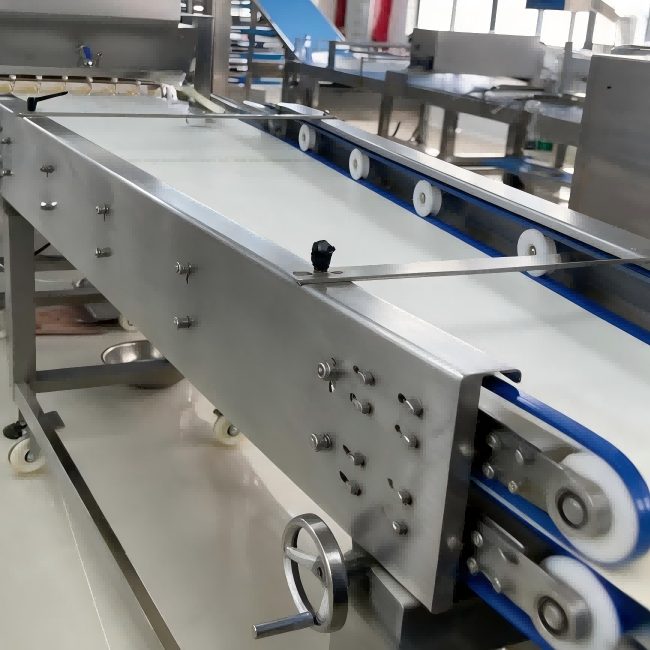
Satellite Roller & Dough Stretching
The pre-shaped dough enters a satellite roller system that progressively thins it through multiple roller heads orbiting a central axis. This is followed by a mechanical stretching station that further extends the dough into an ultra-thin, even film. The combination of satellite rolling and stretching achieves the paper-thin gauge essential for multi-layer texture — without tearing or creating weak spots.
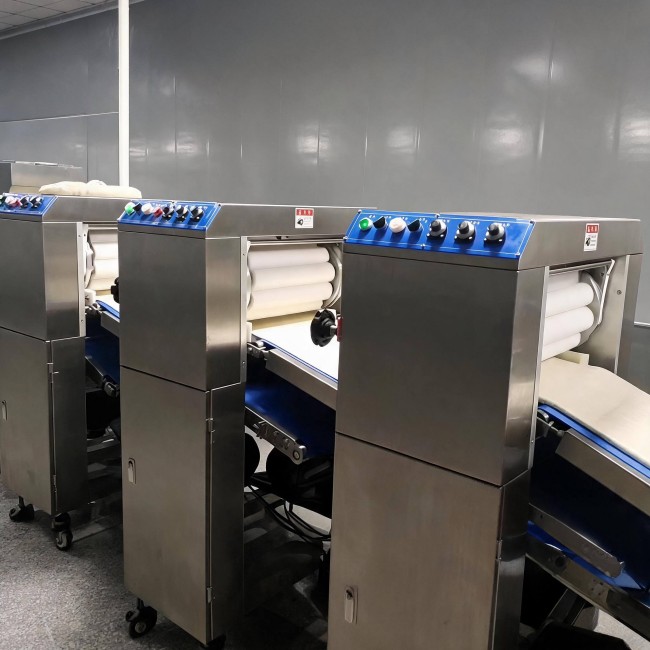
Oil Application & Dough Log Rolling
The ultra-thin dough film passes under a precision oil applicator that deposits an even layer across the entire surface. The oiled sheet is then mechanically rolled into a tight, continuous dough log. The oiled interfaces within the log are the key to the product's structure — during cooking, these layers separate, creating the flaky texture.
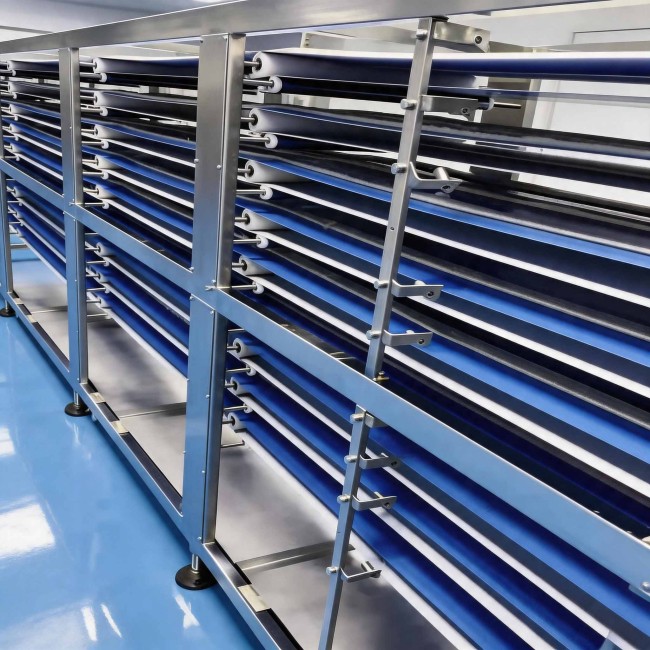
First Relaxing Conveyor & Cutting
The dough log enters a multi-tier relaxing conveyor that provides controlled rest time for gluten relaxation after the mechanical stress of rolling. The multi-tier design achieves extended rest duration within a compact footprint. After relaxing, the log is cut into individual sections of consistent length, each destined to become one pancake.
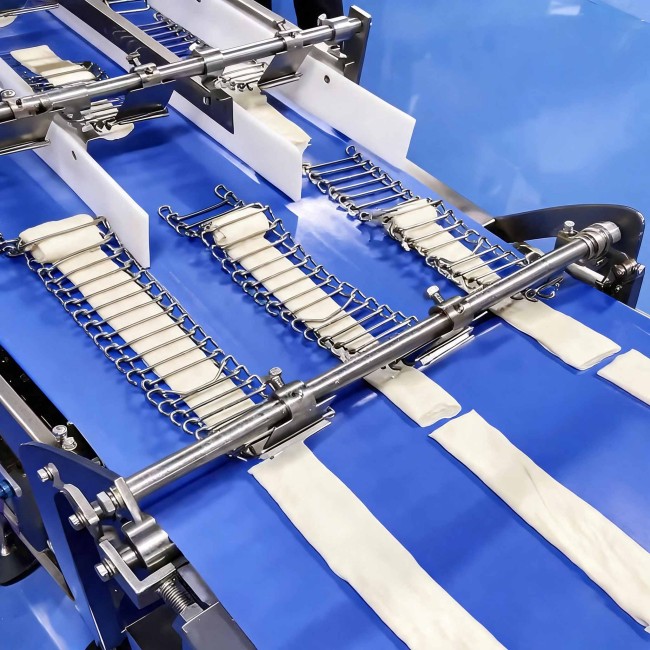
Spiral Coiling
Each cut section is mechanically spiral-coiled into a tight, round dough ball. This transforms the linear layers of the dough log into a circular spiral — the structure that, when pressed and cooked, separates into the product's signature flaky, pull-apart layers.
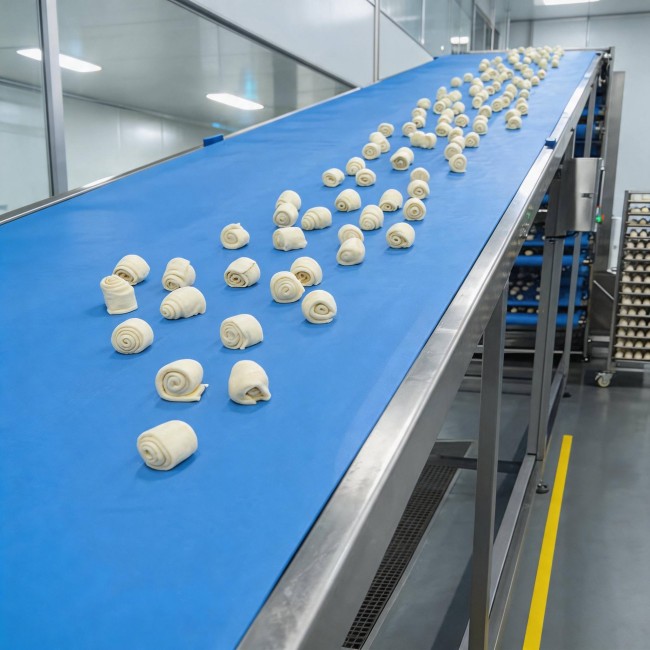
Second Relaxing Conveyor
The coiled dough balls enter a second multi-tier relaxing conveyor. This post-coiling rest is a defining feature of the fully automatic line. Coiling introduces stress into the dough structure; without adequate relaxation, the pressed product would shrink back or cook unevenly. The second relaxing stage ensures complete gluten relaxation for optimal pressing results.
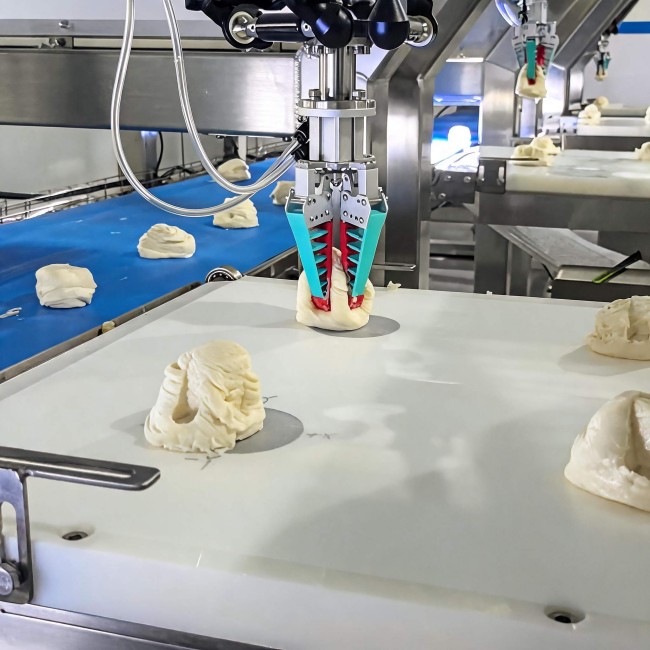
Robotic Arm Pickup & Placement
After relaxing, a robotic arm picks each dough ball and places it precisely onto the press infeed. This automated handling eliminates the manual transfer step required in semi-automatic configurations, enabling the continuous high-speed throughput that defines this line's 10,000+ pieces-per-hour capacity. Precision placement ensures each ball is centered for even pressing.
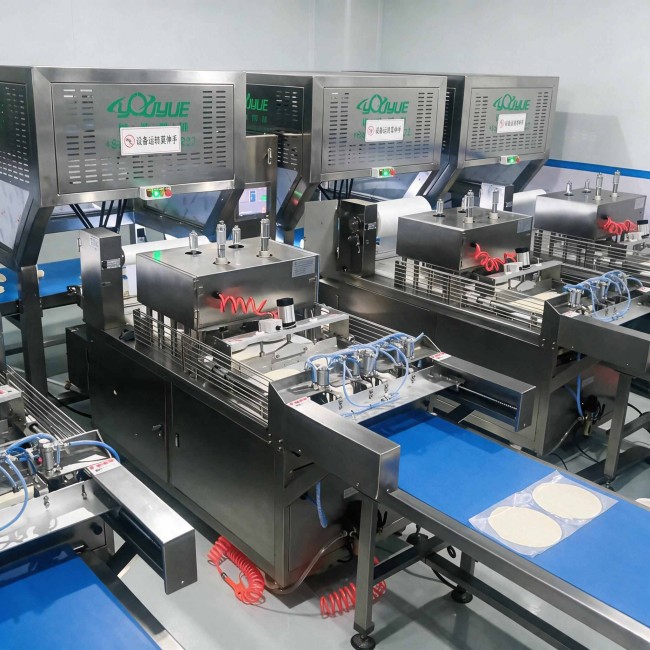
Film Covering & Pressing
Each dough ball is gently pressed into a flat, uniform disc while food-grade protective film is simultaneously applied to both the top and bottom surfaces. The pressing action flattens the spiral-layered ball into the finished product without crushing its internal structure. The film protects the product through freezing, storage, and transport.
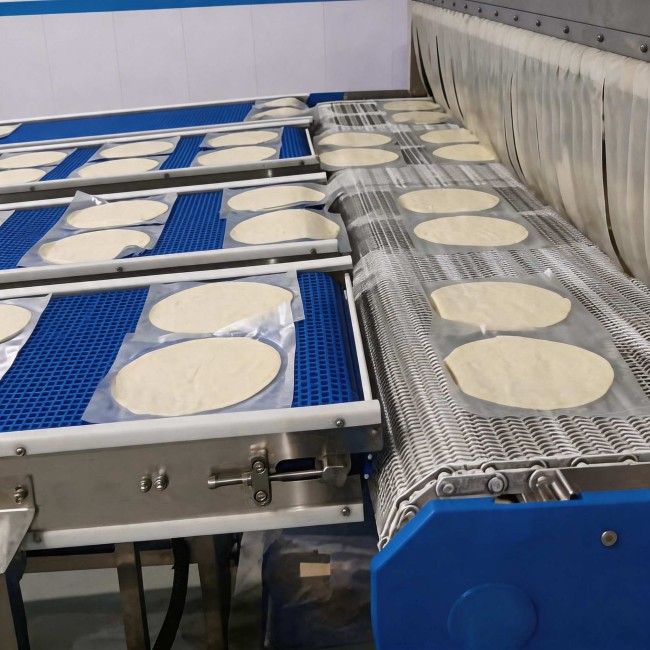
Freezing Tunnel
Film-covered discs enter an integrated IQF freezing tunnel that rapidly brings each piece to frozen temperature individually. Quick freezing preserves product quality, prevents discs from freezing together, and enables efficient downstream packaging and distribution.
Applications
Large-scale frozen flatbread manufacturers supplying retail chains
Export-oriented processors producing layered paratha and flaky flatbread for international markets
Central kitchens for Asian and Middle Eastern restaurant chains with high-volume demand
Co-packing facilities producing private-label multi-layer flatbreads for multiple brands
Manufacturers upgrading from semi-automatic to full automation for capacity expansion
Product Compatibility
While optimized for hand-grabbed pancakes, this line also accommodates related multi-layer flatbread products:
Scallion Pancake — With the optional scallion distribution module, the line produces authentic layered scallion flatbreads with even green onion distribution throughout every piece.
Other Multi-Layer Flatbreads — The forming process is adaptable to a wide range of layered flatbread products. If you have a specific product in mind, we encourage you to send photos and samples. Our engineering team will evaluate your product and recommend the appropriate equipment configuration.