

close
Choose Your Site
Global
Social Media
Views: 0 Author: Site Editor Publish Time: 2026-06-10 Origin: Site


Scaling commercial pizza operations presents a complex challenge for food manufacturers. You must transition from semi-manual processes to fully integrated automation without compromising dough integrity or flavor profile. Striking this optimal balance requires careful planning and deep technical insight.
Industrial buyers often over-index on raw output speed when sourcing equipment. They frequently neglect critical factors like dough stress management and shape consistency. This narrow focus can lead to inferior crust texture and costly production bottlenecks down the line.
We provide a rigorous, evaluation-focused framework to help you navigate this transition. You will learn how to properly shortlist a stainless steel pizza production line tailored to your specific product requirements. We will help you balance mechanical capabilities with strict hygienic compliance and realistic financial returns.
Process Over Speed: True automation prioritizes dough stress management—choosing between hot pressing and continuous sheeting dictates the final product's texture and crust style.
Precision Metrics: Industry-standard equipment should maintain a shape consistency variance of ±2% or less.
Waste Reduction: Modern systems integrate closed-loop scrap reclaim and targeted sauce applicators to significantly reduce ingredient waste.
Holistic ROI: Evaluating an automated pizza line requires looking beyond Capex to assess energy efficiency (kWh/unit) and labor reallocation (e.g., halving manual oversight).
Selecting the wrong dough-forming mechanism fundamentally limits the types of crusts a facility can produce. You cannot easily switch from a dense pan pizza to a porous artisan base using the same core machinery. Understanding the structural differences between pressing and sheeting is your first critical decision.
Hot pressing relies on heated metal platens to stamp dough balls into uniform circles. The heat slightly gelatinizes the surface starches. This process sets the dough shape instantly and prevents shrinking during baking.
These systems work best for traditional Italian thin crusts. They are also ideal for pan-proofed thick-crust American styles. Output expectations typically range from 600 to 15,000 units per hour depending on the lane configuration. When evaluating a hot press, you must assess the platen temperature control. Look for even heat distribution. You should also evaluate pressing uniformity across all lanes to avoid uneven crust thicknesses.
Continuous sheeting takes a completely different engineering approach. It utilizes gradual thickness reduction rather than sudden compression. This protects the dough's gluten structure. It significantly minimizes dough stress during forming.
Sheeting lines excel at handling high-hydration doughs. They are the best choice for Pinsa-style bases, gluten-free options, and highly porous crusts. Output expectations for sheeting lines are usually scaled by weight. They often handle 1,000 to 10,000 kg/hour. The continuous flow allows for massive throughput while preserving artisanal quality.
Feature | Hot Pressing Systems | Continuous Sheeting Rollers |
|---|---|---|
Best Crust Styles | Thin crusts, thick pan-proofed American styles | Pinsa, artisan, high-hydration, gluten-free |
Output Metric | 600 to 15,000 units per hour | 1,000 to 10,000 kg per hour |
Dough Stress | Moderate to High (sudden compression) | Minimal (stress-free gradual reduction) |
Scrap Generation | Very low (pre-portioned balls) | Higher (requires closed-loop edge reclaim) |
A modern production facility operates as a highly coordinated ecosystem. It is not just a single piece of machinery. You must evaluate specific operational nodes along the line to ensure seamless product flow.
Divider Rounders & Alignment: The journey begins with portioning. Look for automated positioning sensors before the sheeting or pressing stage. Proper alignment prevents uneven stretching. Misaligned dough balls create asymmetrical crusts, leading to packaging failures downstream.
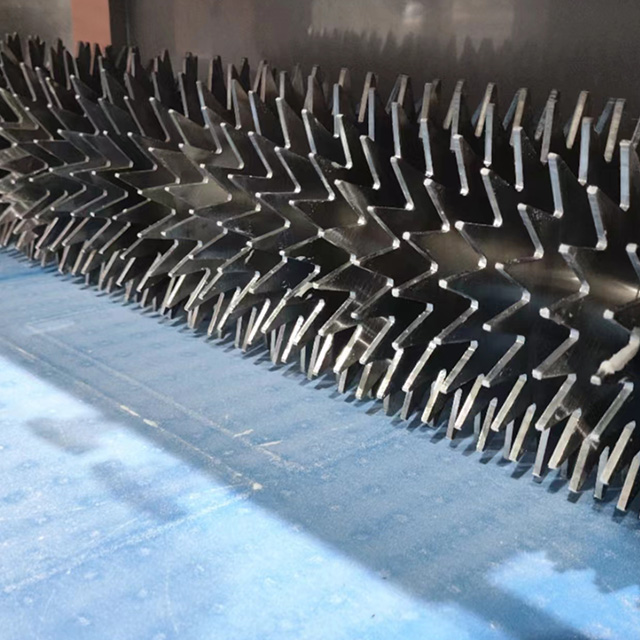
Dough Dockers: Docking is essential for preventing air pockets during high-temperature baking. A docker punctures small holes into the dough surface. Assess the pin durability carefully. You should also demand easy-release hygienic coatings to prevent sticky dough from tearing.
Sauce Application Systems:
Target-Style Applicators: These deposit sauce in distinct circles. They are ideal for precise margin control. Target applicators leave clean crust edges, which prevents burning during baking.
Waterfall Applicators: These create a continuous curtain of sauce. They are better for edge-to-edge coverage and high-speed volume. However, they require robust recovery basins to capture and filter the massive amount of over-spill.
Topping Dispensers: Automated topping stations face unique challenges. They must flexibly handle IQF (Individually Quick Frozen) ingredients, dry cheeses, and custom spice blends. Evaluate the dispensing mechanisms to ensure they operate without clumping or jamming. A quality pizza machine will use servo-driven rakes to distribute toppings evenly across the entire surface area.
Purchasing an industrial line requires setting strict performance baselines. You cannot manage what you cannot measure. Establish clear targets for geometry, hygiene, and data connectivity.
A reliable production line must hold strict geometric tolerances. You should expect a maximum ±2% variance in dough shape and size. Variations beyond this threshold cause inconsistent baking profiles. They also lead to costly topping waste, as sauce and cheese miss the dough base entirely.
Food safety compliance represents a non-negotiable standard. Your chosen equipment must meet rigorous global certifications. These include ISO 22000, HACCP, CE, and EHEDG-compliant hygienic design principles.
Look specifically for washdown-rated, stainless steel components. Ensure the manufacturer uses sloped surfaces where water can drain freely during sanitation shifts. You must also verify the inclusion of antimicrobial conveyor belting to eliminate cross-contamination risks.
Modern bakery automation relies heavily on real-time data. The line should support standard PLC automation protocols like Modbus, Profibus, or OMAC. This connectivity feeds critical production data directly into centralized ERPs. Managers can then perform real-time yield tracking, monitor motor temperatures, and schedule predictive maintenance before a catastrophic failure occurs.
The ingredient landscape is shifting rapidly. Production lines built ten years ago often fail to handle modern recipe formulations. You must future-proof your investment against changing dough chemistries.
Modern consumer preferences lean heavily toward artisanal, high-hydration crusts. These recipes often feature water ratios exceeding 70%. High-hydration dough easily sticks to conveyor belts. It can quickly jam standard machinery.
Evaluate lines that feature anti-stick sheeting rollers. Manufacturers achieve this using specialized food-grade Teflon coatings or proprietary composite materials. You also need intelligent dusting modules. These modules apply a micro-fine layer of flour to the belt exactly where the dough lands, preventing adhesion without drying out the final product.
Continuous sheeting relies on disc cutters to punch round pizza bases from a continuous ribbon of dough. Cutting and docking inevitably produce edge trim. This web of leftover dough represents a massive potential financial loss.
Shortlist manufacturers that offer closed-loop reclaim systems. These systems automatically channel edge scrap back into the primary mixer or the start of the sheeting line. They reincorporate the scrap without degrading the overall dough quality.
You must also assess sauce and cheese recovery loops beneath the conveyor belt. High-volume commercial pizza production generates significant over-spill. A well-engineered recovery basin captures this excess, filters out dough crumbs, and pumps the ingredients back into the application hoppers.
Evaluating an equipment purchase requires looking at long-term financial impacts. You must project how the machinery alters your daily operating expenses over a multi-year horizon.
Move away from focusing purely on capital expenditure (Capex). A cheaper machine often costs significantly more to run. You should evaluate operational expenditure (Opex) over a 5-to-10-year horizon. Factor in spare parts, sanitation time, and utility usage.
Documented industry implementations show remarkable labor efficiencies. Replacing manual topping and Quality Assurance (QA) stations with integrated automation can cut direct line labor by up to 50%. You can reallocate these workers to higher-value tasks.
Furthermore, increased throughput enables radical schedule compression. Some facilities transition from a 6-day production week down to a 4-day week while simultaneously doubling their total volume. This saves massive amounts of money on weekend shift premiums and facility overhead.
Industrial baking and forming equipment draw massive amounts of electricity. Request OEM data on energy consumption per unit (kWh/unit) during your evaluation phase. This metric allows you to accurately forecast utility overhead. Compare the kWh/unit across different vendors to identify the most energy-efficient servo motors and heating platens.
Base your final vendor selection on their ability to handle your specific dough chemistry. Look closely at how their equipment manages your hydration level and fermentation time. Do not make decisions based solely on stated maximum mechanical speeds. A fast machine that damages your dough is a poor investment.
Demand a live pilot test or a Factory Acceptance Test (FAT) before signing a final contract. Use your proprietary dough and your exact IQF toppings during this test. Finally, ensure the vendor offers modular upgrades. Your business will evolve. The ability to add flatbread capabilities or new topping lanes later will protect your initial investment.
A: Most commercial systems range from 1,000 to over 15,000 bases per hour, depending on whether the process uses hot pressing or continuous sheeting.
A: Premium lines utilize stress-free continuous sheeting rollers with specialized non-stick coatings, integrated flour dusters, and automated tension controls to manage sticky, high-water-content doughs.
A: Prioritize washdown-capable, food-grade stainless steel construction, antimicrobial belts, and EHEDG/HACCP compliant designs that allow for tool-less disassembly during sanitation shifts.
A: No, provided you select the correct technology. Target-style applicators deposit sauce precisely within the crust margins, while waterfall systems utilize reclaim basins to filter and recirculate excess sauce.


