

close
Choose Your Site
Global
Social Media
Views: 0 Author: Site Editor Publish Time: 2026-07-01 Origin: Site


Scaling flatbread production requires balancing high-throughput industrial automation alongside delicate handling. Whether you produce pita, lavash, or laminated flatbreads, you must preserve traditional crumb structure and texture. Achieving this careful balance at mass scale demands highly specialized equipment designed specifically for these unique dough types.
Manual or semi-automated processes create daily bottlenecks, yield inconsistencies, and high labor dependency. Upgrading to a specialized flatbread production line for bakery environments involves significant capital expenditure and technical risk. Production managers often face severe operational challenges, specifically around dough stress management and precise thermal control.
This guide breaks down the core technical criteria for evaluating dough forming mechanisms and baking control systems. We help facility managers confidently select an industrial flatbread machine yielding predictable returns. You will learn how to verify product quality, eliminate continuous bottlenecks, and streamline your entire automated operation for maximum efficiency.
Dough Handling Dictates Quality: Stress-free sheeting and precise resting times are non-negotiable for high-hydration or laminated doughs.
Thermal Precision is Critical: High-temperature, multi-zone tunnel ovens with PLC (Programmable Logic Controller) integration prevent under-baking and excessive moisture loss.
Modularity Enables Scale: The most effective systems allow bakeries to switch between products (e.g., transitioning from a pita bread line to a scallion pancake line) with minimal changeover time.
Evaluation Requires Data: Purchasing decisions should be based on OEE (Overall Equipment Effectiveness), footprint constraints, and verifiable hygiene compliance, not just theoretical output speeds.
Standard bread dividers rely heavily on volumetric extrusion to portion dough. This aggressive mechanical action tears the delicate gluten network found in highly hydrated flatbread doughs, which often sit between 65% and 75% hydration. Damaged gluten directly leads to tough textures, irregular shapes, and poor pocket formation in the final bake. Flatbreads need exceptionally gentle handling to maintain their internal air cell structure. We see many commercial bakeries struggle immensely when they try to repurpose standard bread moulders for artisan flatbreads. The dough requires resting and stress-free reduction rather than forceful compression.
Flatbreads require a rapid, exceptionally high-heat bake, often exceeding 400°C (750°F) in a matter of seconds. The thermal dynamics differ entirely from standard loaf breads, which bake slowly at lower temperatures. You often face a severe disconnect between the forming line speed and the oven's thermal recovery time. If the oven loses ambient heat too quickly from the continuous influx of cold dough, you experience massive scrap rates. Pale, dense products emerge from the cooling zones. The baking control system must match the continuous feed rate seamlessly to maintain a stable thermodynamic environment.
Inconsistent forming and baking directly harm unit economics and daily output targets. You waste expensive raw ingredients and incur incredibly high energy expenditures trying to correct thermal imbalances. Rejected batches and inconsistent product weights eat into your operating margins shift after shift. Upgrading to a dedicated flatbread production line completely eliminates these costly inefficiencies. It protects your bottom line through repeatable, data-driven execution. Operators spend less time troubleshooting jams and more time optimizing output speed.
Modern reduction stations and cross-rollers gently process the bulk dough mass without destroying its integrity. They mimic traditional hand-rolling techniques on an industrial scale through a series of progressive, minor thickness reductions. This gentle, multi-stage reduction preserves the cellular dough structure perfectly. Maintaining this delicate structure is absolutely critical for operating a high-quality lavash line. Operators avoid over-stressing the dough before it reaches the final cutting station. Integrated resting conveyors give the gluten time to relax between reduction stages, preventing dough shrinkage during the final bake.
Evaluating forming methods depends entirely on your final product specifications. Die-cut forming works perfectly for uniform pita production, as it ensures exact dimensional accuracy and clean, sealed edges. It stamps out identical shapes from a continuous dough sheet rapidly. Conversely, hot-pressing is often used for tortillas or specific flatbreads requiring immediate surface sealing to trap moisture. Heated platens press the dough balls flat while simultaneously par-baking the outer skin. You must match the physical forming mechanism to your specific product characteristics to achieve the correct mouthfeel.
Some specialty products require complex internal structures and integrated ingredients. A dedicated scallion pancake line demands highly specific forming capabilities beyond simple sheeting. It needs precise automatic oil dispensers, uniform scallion depositors, and automated folding mechanisms. These specialized systems coil, fold, and laminate the dough seamlessly on a continuous belt. They ensure consistent flavor distribution and distinct flaky layers without requiring manual intervention. Attempting to replicate this lamination process by hand at a commercial scale is practically impossible.
Automated sheeting lines generate dough trim from the rotary cutting stations. Automated lines efficiently handle this web of dough trim, pulling it away from the final product seamlessly. They reincorporate this scrap into the initial mixer or dough hopper automatically via return conveyors. This continuous loop maximizes overall yield and prevents massive ingredient waste. The system must perform this transfer gently without over-working the returning gluten. Good scrap management keeps production sustainable, highly profitable, and environmentally responsible.
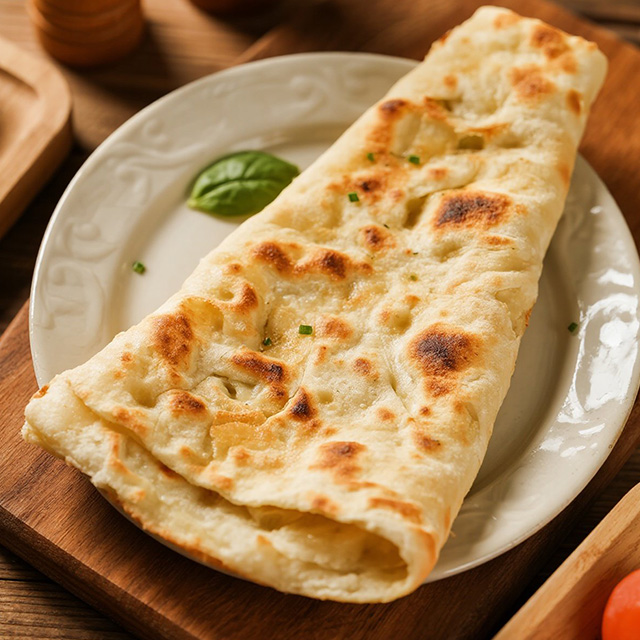
Industrial tunnel ovens must feature fully independent top and bottom heat zones. Flatbreads require aggressive, immediate bottom heat the second they enter the baking chamber. This intense contact heat generates rapid "oven spring," which is responsible for proper pocket formation in pitas. Precise top heat then takes over to ensure ideal coloring and crucial moisture retention. You cannot achieve this dynamic, segmented temperature range using single-zone standard bakery ovens. Advanced systems utilize multiple burners and airflow controls to create a perfectly customized thermal profile.
Belt materials drastically impact the final bake and heat transfer rates. Solid steel bands offer excellent heat retention, rapid thermal transfer, and extreme durability. Heavy stone-coated belts mimic traditional hearth baking beautifully, providing an authentic artisan bottom crust. Mesh belts provide superior airflow for specific flatbread varieties that require convective drying. You should evaluate these specific belt options based on your distinct heat requirements and sanitation ease. Selecting the wrong belt material often results in burnt bases or unbaked centers.
Turning flatbreads during the bake or transfer process presents a common, complex engineering challenge. Mechanical flip stations ensure even baking on both sides for products like thick flatbreads or pancakes. They prevent aggressive surface blistering and uneven internal moisture distribution. Poorly designed transfer points between conveyors often cause product folding, overlapping, or tearing. Robust transfer mechanisms utilize air-jets or micro-pitch conveyors to keep the delicate product perfectly flat and intact. Smooth transitions guarantee a uniform final appearance.
Digital control panels store specific thermal profiles for immediate recall. They allow operators to achieve highly repeatable results across different shifts and changing environmental conditions. A high-quality pita bread line relies entirely on these precise PLC adjustments to manage oven temperatures dynamically. They eliminate all the traditional guesswork from recipe management and thermal tracking. You gain total, centralized control over the entire baking environment.
Common PLC capabilities include:
Automated temperature adjustments per individual heating zone.
Real-time conveyor speed synchronization across the entire line.
Historical data logging for quality assurance and traceability.
Instant recipe recall for rapid, error-free product changeovers.
You must carefully calculate real-world operational capacity versus your available physical floor space. High-speed forming lines require substantial resting proofers and exceptionally long tunnel ovens to achieve proper bake times. Do not base layout decisions on theoretical maximums alone, as actual throughput depends on dough resting requirements. Measure your exact facility dimensions, including ceiling heights and maintenance clearance zones, before committing to a layout. Compact modular designs often provide the best compromise for facilities with rigid spatial limitations.
Washdown compliance represents a non-negotiable buyer criterion in modern food manufacturing. Look strictly for sanitary designs featuring tool-less belt removal, sloped surfaces, and open-frame construction. These hygienic features prevent dough debris accumulation and eliminate bacterial growth zones. Ensure the equipment meets stringent local food safety standards like FDA, CE, or EHEDG guidelines. Easy, intuitive cleaning procedures directly improve your daily operational uptime and reduce dedicated sanitation labor.
High-mix bakeries require rapid, seamless product transitions multiple times a day. You should define clear, measurable success criteria for equipment changeover agility. Assess exactly how quickly the line can retool from producing small six-inch pitas to large rectangular flatbreads. Tool-less modular components, quick-release rollers, and interchangeable cutting dies make these swift transitions possible. Faster changeovers equal significantly more active production hours and higher daily throughput yields.
Evaluation Criteria | Standard Bakery Line | Specialized Flatbread Line |
|---|---|---|
Dough Handling | Aggressive volumetric extrusion | Stress-free gentle reduction |
Baking Temperatures | Low to medium sustained heat | Rapid high-heat multi-zone baking |
Changeover Time | Lengthy mechanical tool adjustments | Rapid tool-less module swapping |
Sanitation Design | Enclosed frames, difficult to access | Open-frame, fully washdown compliant |
Marrying brand-new equipment to existing facility infrastructure carries distinct operational risks. You must seamlessly connect spiral mixers, resting conveyors, cooling towers, and packaging lines without creating bottlenecks. Misaligned conveyor speeds or incompatible transfer heights cause immediate product jams and line stoppages. Consult dedicated integration engineers to accurately map out these critical physical transfer points. Seamless, synchronized flow prevents disastrous pile-ups right at the final packaging stage.
Moving from semi-manual production to fully automated continuous lines requires mandatory recipe tweaks. You simply cannot use your exact manual recipe on a high-speed industrial line without modification. Hydration levels, mixing times, and yeast ratios usually need precise adjustment to accommodate mechanical handling. Bakeries must budget dedicated, uninterrupted time for rigorous product testing prior to full commercial launch. Adjusting the base formula ensures optimal machine performance and consistent final product quality.
Automated baking controls require a significant paradigm shift on the bakery floor. Operators must transition away from traditional "baker's intuition" toward strict data-driven oversight. They need comprehensive, hands-on training covering PLC navigation, sensor monitoring, and basic mechanical troubleshooting. We strongly recommend implementing standardized operating procedures (SOPs) for every single production shift. Well-trained staff maximize equipment lifespan, maintain safety protocols, and minimize daily product waste.
We strongly recommend conducting an extensive FAT before the equipment ever leaves the manufacturing facility. Run these critical tests using your bakery's actual raw ingredients, not generic substitutes. Flour characteristics, protein content, and ambient humidity vary wildly by geographical region and milling process. Testing confirms the machine handles your specific hydration levels and dough rheology correctly. It mitigates major integration risks, identifies design flaws, and ensures performance guarantees prior to final installation.
Document your exact current yield, scrap rates, and throughput bottlenecks accurately.
Send proprietary raw ingredient samples directly to the equipment manufacturer for testing.
Run a full-speed, multi-hour continuous test during the FAT phase.
Train multiple operators across different shifts, rather than relying on a single shift lead.
Successful flatbread automation hinges entirely on process synergy and mechanical precision. You must pair stress-free dough forming mechanisms with highly responsive, data-driven baking controls. This specific combination preserves the delicate gluten structure while ensuring a perfect, rapid bake. Standard equipment simply cannot replicate the specialized handling required for high-hydration, delicate doughs.
An optimized production line completely protects your core product integrity and brand reputation. It achieves this consistency while aggressively lowering per-unit manufacturing expenses and reducing heavy labor dependency. You gain a massive, sustainable competitive advantage in the demanding wholesale bakery market.
Map out your current production bottlenecks and scrap sources today. Gather your exact throughput requirements, facility footprint measurements, and future product goals. Schedule a technical consultation or a dedicated testing lab session with a trusted equipment manufacturer immediately to explore your specific automation options.
A: Modern modular designs dramatically reduce equipment downtime during product transitions. Utilizing tool-less changeovers and quick-release mechanisms, operators can transition the line in just 15 to 30 minutes. This timeframe depends heavily on the specific line's complexity and the required thermal adjustments in the oven. High-mix bakeries benefit greatly from these rapid, interchangeable forming stations.
A: Yes, a single line can produce both varieties if it utilizes a highly modular design. The sheeting and cutting stations must feature interchangeable modules to handle different dough thicknesses and shapes. However, operators must make significant PLC adjustments during the changeover. Pita and lavash require vastly different baking times and multi-zone thermal profiles.
A: Direct gas-fired tunnel ovens offer the highest energy efficiency for industrial flatbread operations. Modern units feature advanced ceramic insulation and intelligent heat recovery systems. These technologies capture exhaust heat and redirect it, minimizing total fuel consumption. They maintain the aggressive high temperatures required for flatbreads without wasting expensive thermal energy.
A: Highly hydrated doughs are exceptionally sticky, delicate, and prone to tearing. Automated lines manage them using specialized automated flour dusters and active optical sensors that monitor dough tension. They utilize non-stick synthetic rollers during the gentle dough forming phase. This stress-free handling prevents tearing and maintains the crucial internal air cell structure.


