

close
Choose Your Site
Global
Social Media
Views: 0 Author: Site Editor Publish Time: 2026-07-03 Origin: Site


Upgrading to a high-capacity production system is a significant operational decision. Bakery managers must carefully bridge the gap between delicate dough formulation and rigorous mechanical processing. Doing so ensures you maintain strict product consistency at massive scales. Scaling up introduces complex variables in gluten development during the sheeting phase. It also creates ongoing challenges regarding moisture retention inside commercial baking chambers. Without precise engineering, food facilities often face high scrap rates, inconsistent product shapes, and compromised shelf life.
This guide provides production leaders and engineering teams with an evidence-based evaluation framework. We will thoroughly explore advanced sheeting mechanics, optimal oven configurations, and seamless system integration. You will learn exactly how to set up a reliable, continuous operation. We will help you tailor these mechanical elements specifically to your unique factory floor requirements, ensuring long-term operational success.
Precision Sheeting: Managing gluten retraction requires staged, multi-roller reduction rather than aggressive single-pass pressing to ensure a uniform flat tortilla line.
Thermal Control: Effective oven setups rely on independent temperature zones and calibrated dwell times to bake without excessive moisture loss.
Sanitation & Compliance: An SS (Stainless Steel) tortilla line with modular access reduces downtime and ensures food safety compliance.
Semi-automatic processes often create severe bottlenecks on the factory floor. They lead to inconsistent product diameters and excessively high labor costs. Transitioning to a continuous system directly addresses these hidden inefficiencies. Manual handling simply cannot keep pace with growing market demands. Operators naturally struggle to maintain exact pressure and timing during long production shifts. This human error translates directly into product variation, which ultimately frustrates end consumers.
When you invest in a robust commercial tortilla maker, your baseline success criteria shift dramatically. Standardized product weight and uniform thickness become the everyday expectation rather than the exception. Facilities immediately see drastically reduced scrap rates during their daily runs. You also gain highly predictable throughput metrics. Predictability allows floor managers to schedule downstream packaging and shipping operations with total confidence.
However, implementation reality involves more than just plugging in new machinery. Moving to a fully automated system requires strict upstream dough control. You must dial in precise hydration ratios inside your mixing bowls. Resting times must match the exact processing speed of your new equipment. If dough proofs too long, it becomes overly extensible and sticky. If it rests too little, it heavily resists the rollers. We always recommend synchronizing your mixing batches carefully. This guarantees a steady flow of properly conditioned dough hits the primary hopper exactly when the line needs it.
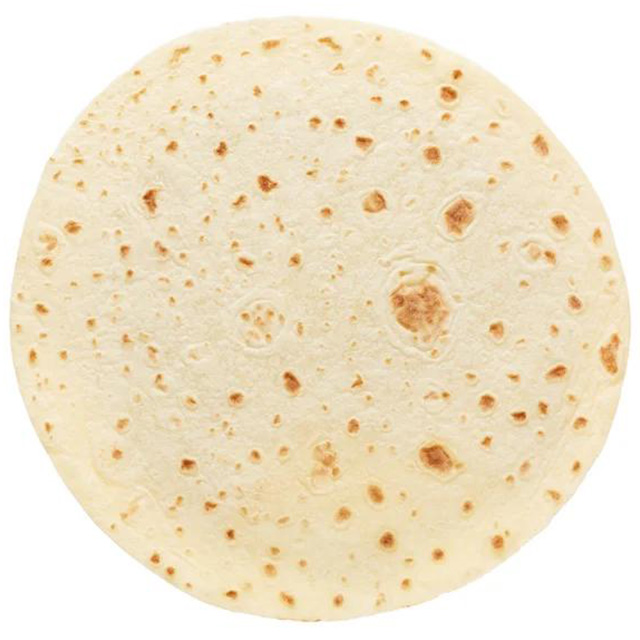
High-speed sheeting presents a unique mechanical challenge for bakery engineers. You must aggressively overcome natural gluten retraction. Wheat dough naturally wants to snap back after you stretch it. Applying too much pressure in a single mechanical pass damages the internal cell structure. This is why sequential reduction rollers are absolutely necessary. They gently relax the dough sheet over multiple stages, typically reducing thickness by small percentages per pass. Gradual reduction prevents sudden shrinkage and eliminates tough, chewy textures in the final bake.
Cross-rolling technology plays a vital role in absolute shape control. The continuous dough sheet passes through standard forward rollers first. Then, it hits a specialized 90-degree cross-roller assembly. This multidirectional stretching ensures a perfectly round shape. It also guarantees uniform thickness across the entire product diameter. These tight tolerances are critical for operating a standardized flat tortilla line. Variances in thickness inevitably lead to uneven baking profiles and frustrating packaging jams.
Die-cutting and scrap return systems optimize your raw material usage continuously. Precision rotary cutters stamp out perfect circles from the moving dough sheet. But what happens to the remaining dough webbing? Automated systems instantly recirculate this scrap dough back into the primary feed hopper. The integration carefully blends fresh and scrap dough. This clever engineering minimizes raw material waste without over-working the delicate gluten matrix.
From an authoritative engineering standpoint, varying flour types demand distinct mechanical settings. Wheat and corn possess entirely different rheological properties. Corn masa lacks gluten and requires different handling techniques than highly elastic wheat dough. Operators must utilize adjustable roller gaps across the entire line. Variable speed controls are also completely mandatory. These flexible features allow you to accommodate different recipe formulations seamlessly on the same equipment.
A robust baking architecture ultimately determines your final product quality. Multi-tier commercial ovens typically utilize a 3-tier or multi-pass design framework. This configuration maximizes critical dwell time within a highly compact factory footprint. The dough travels back and forth across three distinct vertical levels. This extended thermal journey ensures thorough baking without requiring a massive, impractically long linear tunnel.
Temperature zoning remains critical for optimal moisture retention. Effective ovens feature independent burner controls for the top, middle, and bottom tiers. The first tier typically applies very high heat to sear the raw surface. This rapid searing traps internal moisture instantly, preventing a dry crumb. Subsequent tiers use slightly lower temperatures to bake the center thoroughly. Independent zoning achieves those characteristic, visually appealing toast marks without drying out the product.
Belt materials significantly influence heat transfer efficiency and maintenance schedules. Operators commonly evaluate Teflon-coated fiberglass against carbon steel mesh belts. Each material offers distinct advantages for specific baking environments.
Oven Belt Material Comparison | |||
Material Type | Heat Transfer Efficiency | Maintenance Profile | Best Application |
|---|---|---|---|
Teflon-Coated Fiberglass | Moderate and highly uniform across the surface. | Requires careful cleaning. Prone to mechanical tearing if mishandled. | Products requiring a smooth, completely non-stick baking surface. |
Carbon Steel Mesh | Excellent and rapid heat conductivity. | Highly durable. Requires regular seasoning to prevent surface rust. | High-volume continuous baking and distinct traditional toast marking. |
Improper exhaust setups pose a massive implementation risk for bakeries. Baking naturally generates significant steam and heavy combustion gases. If exhaust fans pull too hard, they remove critical humidity from the chamber. This dries out the dough prematurely and creates brittle edges. Conversely, inadequate ventilation creates severe condensation issues. This leads to rapid belt degradation and wildly inconsistent baking environments. Proper airflow balancing remains non-negotiable for stable daily operations.
True operational efficiency requires flawless system synchronization from start to finish. Individual machines simply cannot operate in total isolation. The dough divider, rounder, proofer, sheeting head, oven, and cooling conveyors must communicate constantly. They achieve this real-time communication via a unified Programmable Logic Controller (PLC). A single touch-screen interface allows operators to monitor and adjust the entire line simultaneously. If the oven slows down due to thermal limits, the upstream divider automatically matches that exact pace.
We cannot overstate the importance of a fully automatic tortilla system architecture. This deep integration minimizes human intervention on the factory floor. It drastically reduces common error rates and prevents product pile-ups between unlinked stations.
The cooling phase often receives insufficient attention during initial line design. However, extended ambient cooling conveyors are absolutely non-negotiable. Freshly baked products exit the oven carrying immense heat and latent internal moisture. If you stack them immediately, condensation forms inside the plastic packaging. This trapped moisture rapidly accelerates dangerous mold growth. Properly sized cooling tiers gradually reduce the core temperature. They stabilize the product structure entirely before it reaches the final packaging wrapper.
Sanitation and preventive maintenance drive long-term equipment viability. Food safety standards grow stricter every single year globally. Investing in an SS tortilla line represents a proactive, highly effective compliance strategy. Stainless steel inherently resists harsh cleaning chemicals and prevents dangerous bacterial harboring. Look closely for washdown-capable designs featuring tool-less belt removal mechanisms. Accessible catch pans allow sanitation crews to clean the machinery quickly and thoroughly. This reduces costly operational downtime between distinct product changeovers.
Selecting the right equipment requires a structured, deeply evidence-based approach. We recommend breaking your evaluation down into distinct physical and operational categories. This prevents oversight and ensures seamless integration into your existing infrastructure.
First, you must assess footprint versus capacity requirements carefully. Spatial limitations often dictate your final equipment selection. Modular designs allow for future expansion as your sales volume grows. However, your existing floor layout strictly limits cooling tier lengths. You must measure your available linear space meticulously before ordering. Vertical space also matters immensely when considering multi-tier proofing and baking cabinets.
Next, evaluate long-term operational considerations beyond the initial capital expenditure. Day-to-day efficiency drives true profitability over the machine's functional lifespan.
Consider these critical operational factors when comparing machinery:
Energy Consumption: Compare gas versus electric oven configurations based on your local utility rates.
Wear-Parts Lifespan: Assess exactly how frequently cutting dies, bearings, and drive belts require replacement.
Changeover Times: Measure the actual minutes needed to switch product diameters safely and effectively.
A rigorous shortlisting logic prevents expensive procurement mistakes. Never rely solely on glossy marketing brochures. You should always request actual performance data from operational facilities. Ask manufacturers for verifiable uptime metrics and historical scrap rates. OEM turnkey installation and comprehensive training support are also absolutely vital. A machine only performs as well as the local operators running it.
Finally, adopt a strictly evidence-oriented approach before signing any final contracts. We strongly advise testing your specific dough formulations on the manufacturer's test equipment. Every bakery uses a highly unique blend of flours, fats, and dough conditioners. A successful test run provides tangible proof of concept.
Below is a simple chart representing the structured evaluation workflow when selecting a tortilla production line for bakery operations.
Equipment Evaluation Workflow | ||
Phase | Action Required | Expected Outcome |
|---|---|---|
Phase 1: Spatial Audit | Measure ceiling height and exact linear floor space. | Clear dimensional limits for safe equipment layout. |
Phase 2: Formulation Testing | Run proprietary dough on OEM test machinery. | Verification of dough compatibility and final yield. |
Phase 3: Utility Assessment | Calculate gas vs electric consumption rates globally. | Optimized energy strategy for the new automated line. |
Phase 4: Support Verification | Confirm OEM training protocols and parts availability. | Guaranteed operational support post-installation. |
Procuring a reliable tortilla production line demands careful cross-functional planning. Engineering requirements must align with product development goals seamlessly to ensure lasting success.
A reliable commercial production system functions as a tightly synchronized ecosystem. Precise dough sheeting mechanics dictate your initial shaping success. Robust oven setups ultimately determine your product's final texture and shelf life. Every single component must work in perfect mechanical harmony to achieve high-volume consistency.
We strongly encourage bakery buyers to take immediate, data-driven next steps. First, audit your current factory footprint accurately. Next, define your target throughput metrics for the upcoming fiscal year realistically. Finally, request custom layout proposals from a shortlist of proven equipment manufacturers. This structured approach ensures a highly successful transition to high-capacity automation.
A: Dough resting time typically ranges between 5 and 15 minutes. This timeframe depends heavily on your specific hydration levels and chosen dough conditioners. Proper resting allows the gluten network to relax fully. This critical step prevents aggressive snap-back during the mechanical sheeting process, ensuring a tender final product.
A: Advanced systems utilize interchangeable rotary cutting dies. Operators can swap these precision dies out within minutes. Furthermore, adjustable PLC speed settings automatically synchronize the conveyor speeds to match the new dimensions. This powerful combination allows rapid changeovers between various product sizes with minimal operational downtime.
A: Stainless steel construction ensures strict compliance with FDA and CE hygiene standards. The material highly resists corrosion caused by daily exposure to aggressive cleaning chemicals. Additionally, stainless steel offers superior mechanical longevity in humid, high-temperature factory environments, protecting your long-term equipment investment effectively.
A: Ovens prevent unwanted ballooning through a precise combination of heat profiling and mechanical prep. The top tier utilizes an initial high-heat searing phase to instantly set the dough's surface. Upstream, precise dough aeration and mechanical docking techniques create tiny vents. These micro-vents allow steam to escape safely during the baking cycle.


