

close
Choose Your Site
Global
Social Media
Views: 0 Author: Site Editor Publish Time: 2026-06-24 Origin: Site


Scaling high-volume production for regional staples creates massive operational bottlenecks. You need incredible speed. Yet, you cannot sacrifice the delicate texture customers expect. Relying on standalone griddles or manual flipping drives up labor costs. You face strict output limits. You battle constant product inconsistency daily. The transition to a fully integrated egg-filled pancake line changes everything.
Automation in this category does more than just boost hourly yield. It standardizes ingredient usage. It reallocates your labor force to higher-value tasks. When correctly specified, it lowers the cost per unit while stabilizing quality. You will learn how these automated systems upgrade workflows. We will explore key equipment evaluation criteria. We will also cover implementation realities to help you maximize your return on investment.
Transitioning to an automated line shifts operational bottlenecks from manual cooking to upstream ingredient prep and downstream packaging.
Precision volumetric dosing reduces filling waste and standardizes product quality.
Evaluating an egg pancake machine requires looking beyond theoretical maximum output to assess continuous operational uptime and cleaning turnaround.
Successful deployment requires rigorous Factory Acceptance Testing (FAT) using specific proprietary batter and filling formulations.
Manual cooking severely limits production scaling. Human operators can only manage a few griddles simultaneously. This reliance creates systemic bottlenecks across your entire facility. You lose time, ingredients, and money.
High turnover plagues manual cooking roles. Operating a hot griddle demands intensive training. Working in a hot-environment fast bakery setting is physically exhausting. Operators burn out quickly. You spend valuable resources constantly hiring and retraining staff. This cycle disrupts production schedules.
Manual operations suffer from thermal inconsistency. Griddles lose heat unevenly during batch cooking. This causes massive yield loss. You end up with undercooked batter in the center. Edges burn and turn brittle. Product rejection rates climb steadily. You cannot guarantee a uniform product for your customers.
Ingredient waste destroys profit margins. Manual filling creates messy, inconsistent ratios. Proteins and specialized egg fillings are expensive. Over-portioning eats directly into your profits. Under-portioning ruins customer trust. A heavy hand on the filling scoop costs you thousands of dollars annually.
Comparing Manual vs. Automated Production Baseline Metrics | ||
Production Metric | Manual / Semi-Automatic Operation | Fully Automated Operation |
|---|---|---|
Labor Requirement | High (Multiple operators per line) | Low (1-2 operators for monitoring) |
Thermal Stability | Inconsistent (Prone to hot/cold spots) | Highly Stable (PID temperature control) |
Portion Accuracy | Variable (Depends on operator skill) | Exact (Gram-level volumetric dosing) |
Scrap / Waste Rate | High (Burnt edges, spills) | Minimal (Synchronized mechanics) |
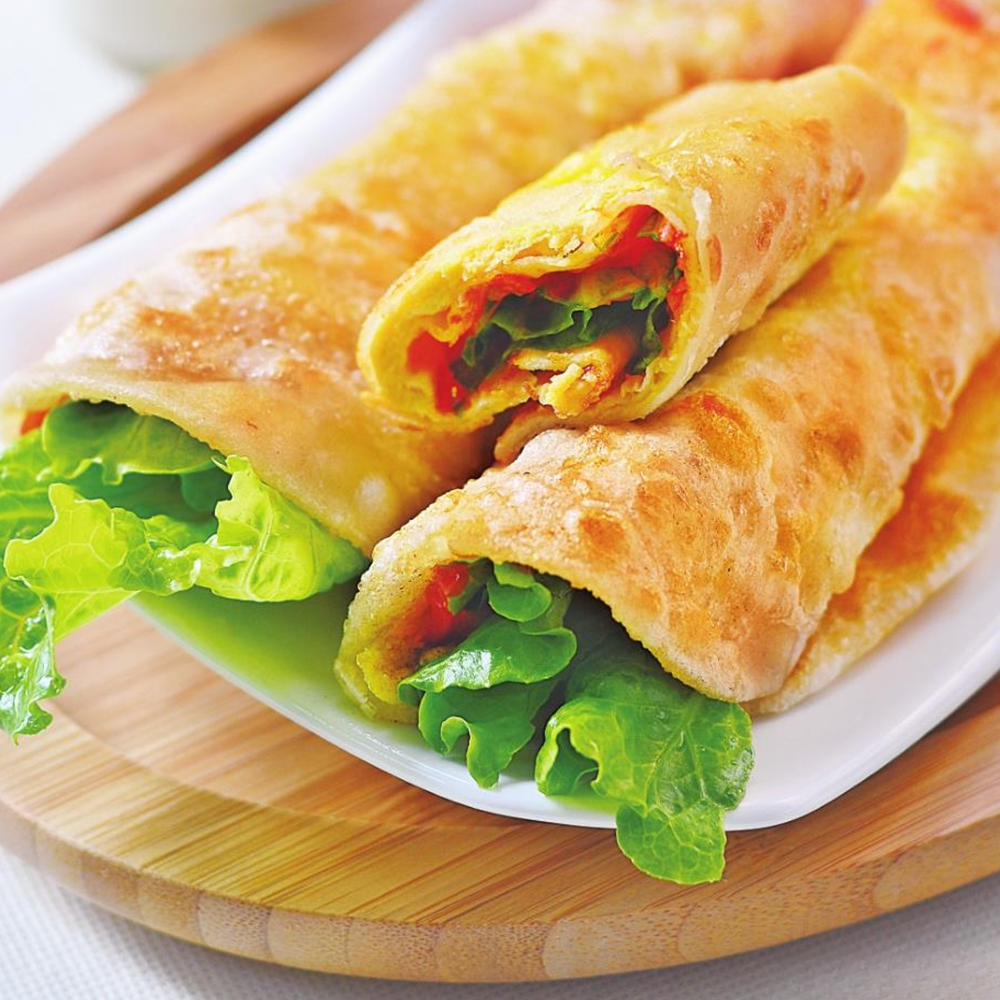
Switching to automation fundamentally changes your bakery workflow. Machines replace guesswork with synchronized mechanics. This ensures every product matches your exact specifications.
Continuous baking mechanics stabilize thermal transfer. Rotary baking drums replace outdated batch-cooking methods. Continuous heated tracks maintain exact temperatures. They eliminate the thermal drops common in manual batch cooking. The batter receives uniform heat instantly. This guarantees a perfect bake every time.
Volumetric dosing systems eliminate portioning errors. Synchronization is critical here. The system pours batter and injects egg filling simultaneously. It guarantees an exact gram-weight per unit. Upgrading to an automated pancake line minimizes costly spillover. You control ingredient usage down to the gram.
Integrated folding and forming systems protect the product. Mechanical folders handle the hot pancake immediately. They route finished goods directly to cooling conveyors. Human hands never touch the hot food. This improves food safety and speeds up packaging.
An automated workflow generally follows these sequential stages:
Batter Deposition: Precision nozzles deposit a continuous or segmented batter ribbon onto the heated drum or belt.
Primary Baking: The batter travels through a precisely controlled thermal zone to set the base structure.
Filling Injection: Servo-driven pumps inject the exact volume of egg or protein filling onto the semi-baked base.
Mechanical Folding: Automated plows or robotic arms fold the edges to seal the filling inside.
Final Pressing & Cooling: The formed pancake is lightly pressed and routed to a cooling spiral before packaging.
Purchasing commercial equipment requires strict due diligence. You must match machine capabilities to your facility constraints. Minor oversights during evaluation cause major headaches during installation.
Do not just look at maximum theoretical output. Match claimed units-per-hour against your actual floor space. Remember to include required clearances. Cooling tracks take up significant room. Compare the dimensions of the egg pancake machine against your existing factory layout. A machine producing 5,000 units hourly is useless if it blocks forklift aisles.
Demand robust material quality. Look for food-grade 304 or 316 stainless steel construction. Sanitation compliance dictates your daily operational uptime. Ask vendors about Clean-In-Place (CIP) systems. Quick-release belts speed up daily teardowns. Accessible internal mechanisms ensure you meet strict hygiene standards easily. Hard-to-reach corners breed bacteria and cause failed inspections.
Modern production relies on smart control systems. Advanced lines use PLC touchscreens. Operators store and recall specific recipe parameters easily. They adjust temperatures, belt speeds, and dosing volumes in seconds. The equipment must remain adaptable. You might produce different Chinese breakfast variations later. Adjusting pancake thickness or handling varied filling viscosities is essential for menu expansion.
Installing heavy bakery machinery disrupts normal operations. You must prepare your facility and your team. Proactive planning mitigates installation risks and prevents expensive delays.
Utility infrastructure requirements often catch buyers off guard. High-draw electrical heating requires upgraded facility capacity. Some facilities use commercial gas infrastructure instead. You also need compressed air for pneumatic components. Exhaust ventilation manages heat and cooking fumes safely. Verify your facility utilities before placing an equipment order.
Operator skill shifts are inevitable. Your staff must transition roles. They stop being manual cooks. They become machine operators. They monitor PLC diagnostics actively. They perform rapid troubleshooting to keep the line moving. You must invest in comprehensive technical training for your shift leads.
Account for planned maintenance downtime. Preventative maintenance keeps production reliable. Schedule downtime appropriately. Ignoring small wear parts leads to catastrophic machine failures mid-shift.
Standard preventative maintenance routines include:
Tensioning and aligning the Teflon baking belts weekly.
Calibrating thermal heating elements and PID controllers monthly.
Replacing silicone seals and dosing nozzles before they degrade.
Lubricating drive chains and bearing housings per manufacturer specs.
Selecting the right vendor impacts your financial return directly. You must evaluate immediate costs against long-term operational savings. A cheaper machine often costs more in wasted ingredients and downtime.
Balance your initial capital expenditure against projected returns. Factor in the reduction of manual labor hours. Calculate the savings from minimized ingredient waste. Consider your increased capacity for bulk-order fulfillment. These variables determine how quickly the equipment pays for itself.
Key ROI Calculation Variables | |
Variable Factor | Impact on Return Investment |
|---|---|
Labor Reallocation | Reduces hourly wage dependency per product unit. |
Waste Reduction | Saves premium ingredient costs via precise dosing. |
Yield Increase | Unlocks larger wholesale contracts and bulk orders. |
Uptime Reliability | Prevents revenue loss from unplanned breakdowns. |
Never skip the Factory Acceptance Test (FAT). Test your specific batter viscosity. Run your exact filling ingredients through their pumps. Do this before signing off on delivery. Vendor claims look great on paper. The FAT proves machine capability using your proprietary recipes.
Evaluate post-sale support rigorously. Hardware breaks down eventually. Evaluate domestic spare parts availability. Review warranty scopes on critical components like motors and PLCs. Check the Service Level Agreement (SLA) response times. Waiting weeks for an overseas part paralyzes your entire bakery operation.
Upgrading to an automatic system represents a strategic transformation. It shifts how you manage utilities, ingredients, and labor. You eliminate the unpredictability of manual cooking. You gain precise control over your profit margins and product quality.
Take actionable steps now. Formulate baseline throughput targets first. Draw up accurate facility layout schematics. Identify your exact utility constraints. Complete these steps before entering vendor discussions or requesting equipment quotes. Preparation ensures you select the right automation partner for your bakery.
A: Output varies based on equipment size, lane configuration, and baking time. Small single-lane systems produce 1,000 to 2,000 units per hour. Large multi-lane industrial setups can exceed 8,000 units hourly. Thicker batters require longer dwell times, slightly reducing maximum throughput speeds.
A: Yes, but it requires specific equipment. Standard piston fillers handle liquid eggs well. High-viscosity or chunky fillings require specialized auger-driven dosing pumps or heavy-duty pneumatics. Always specify your filling texture to the vendor to ensure correct pump selection.
A: Cleaning times depend on machine design. Systems featuring automated Clean-In-Place (CIP) technology take roughly 45 to 60 minutes. Machines requiring full manual teardowns of pumps, nozzles, and belts can take up to two hours per shift for proper sanitation.
A: Industrial lines require robust infrastructure. Expect to supply high-amperage three-phase power or commercial-grade gas lines for the heating elements. You also need dedicated compressed air lines for pneumatic valves. Heavy-duty industrial exhaust ventilation is mandatory to manage ambient heat.


