

close
Choose Your Site
Global
Social Media
Views: 0 Author: Site Editor Publish Time: 2026-06-13 Origin: Site


Transitioning to or upgrading an automatic meat pie line requires careful planning. You must balance upfront capital expenditure against long-term yield consistency. Facility managers often face a harsh reality during these major upgrades. Misaligning equipment specifications with actual production demands creates massive operational headaches. You might experience severe ingredient waste through portion giveaway. Frequent downtime and potential food safety bottlenecks also threaten your profitability.
This guide provides an evidence-based framework for evaluating such machinery. We aim to help operational directors mitigate rollout risks effectively. You will learn how to define production constraints accurately. We explore how to scrutinize core engineering components for better reliability. You will also uncover strategies to shortlist the right vendor for your specific operations. Ultimately, this knowledge ensures your upcoming upgrade delivers measurable business value.
Evaluate capacity not just by maximum output, but by sustainable throughput and changeover times.
Prioritize 304/316 stainless steel (SS) construction and tool-less washdown capabilities to meet strict HACCP compliance.
Volumetric filling accuracy is the most critical metric for protecting profit margins against ingredient giveaway.
Vendor selection must hinge on factory acceptance testing (FAT), spare parts availability, and localized commissioning support.
Throughput claims often differ from daily operational reality. Many manufacturers quote theoretical maximum output speeds. Real-world operations look vastly different. You must assess realistic production targets carefully. Factor in your mandatory maintenance shifts. Account for daily sanitation breaks as well. A machine rated for 10,000 units hourly might only yield 7,500 consistently. We recommend calculating capacity based on sustainable, shift-long throughput.
Next, audit your specific product specifications closely. Analyze the physical characteristics of your meat fillings. Note the viscosity, chunk size, and serving temperature. A filling featuring 15mm meat chunks flows differently than a smooth puree. Evaluate your dough types carefully too. Shortcrust and puff pastry require vastly different handling techniques. Your chosen machine must accommodate these unique material behaviors.
Calculate your available facility footprint accurately. Space constraints often dictate equipment selection. Map out utility drop locations across your floor plan. Identify available connections for power, compressed air, and water. Heavy industrial equipment demands robust utility infrastructure. Clean dry air (CDA) is especially critical for pneumatic actuators. Insufficient utilities will cripple a new production line immediately.
Finally, establish clear ROI metrics before purchasing. Define acceptable payback periods based on tangible improvements. Focus primarily on projected labor reductions. Calculate the value of decreased product rejection rates. High-quality machinery reduces scrap dough and wasted meat filling. These daily savings accumulate rapidly. They often justify a higher initial purchase price over time.
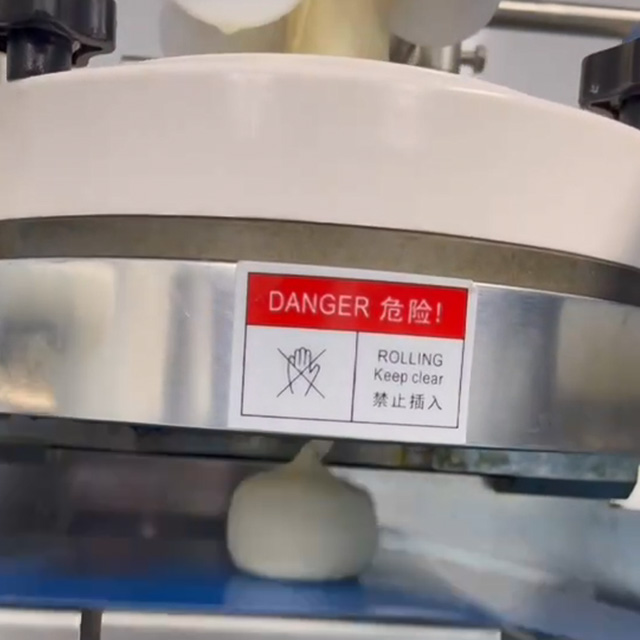
Engineering dictates product quality and consistency. Dough handling mechanics require close attention during your evaluation. Look for stress-free sheeting or extrusion mechanisms. They must maintain dough integrity continuously. You cannot over-work the delicate gluten network. Tough dough ruins the final consumer experience. The best systems mimic gentle hand-rolling techniques automatically.
Precision filling systems protect your profit margins. You must evaluate the filling station thoroughly. It must process highly viscous mixtures easily. It should handle particulate-heavy meat mixtures without blocking. The system cannot crush or degrade the premium ingredients. Specify a strict maximum acceptable deviation rate. We recommend aiming for ±1% variance per pie. Small weight giveaways cost thousands over a busy month.
Assess molding and forming versatility next. Examine the physical changeover process for die-cuts and molds. A high-quality meat pie machine transitions between shapes seamlessly. You should produce round, square, or bespoke shapes easily. Avoid systems requiring proprietary, expensive secondary tooling. Modular die sets offer the best long-term flexibility.
Consider these practical steps when evaluating engineering components:
Request a live demonstration of the dough sheeting process.
Measure filling weight variance across a 100-pie sample run.
Time the exact duration required to swap mold shapes manually.
Inspect the cutting mechanisms for clean, fray-free dough edges.
Verify the availability of custom die shapes for future products.
Food safety failures can destroy a brand overnight. The "SS" standard remains non-negotiable for meat processing. Mandate food-grade 304 or 316 stainless steel explicitly. Apply this rule to all product contact zones. These materials resist corrosion exceptionally well. They withstand attacks from meat fats, heavy salts, and harsh cleaning agents.
Sanitary design requires careful visual inspection. Look for sloped surfaces across the entire chassis. They prevent water pooling after sanitation. Demand continuous welds instead of spot welds. Avoid machines harboring dark dead spaces. Microbiological hazards form quickly in these hidden areas. Bacteria thrive wherever cleaning tools cannot reach easily.
You must establish strict Critical Control Points (CCPs). Ensure the system integrates smoothly into your safety infrastructure. It must connect with inline metal detectors. It should sync with X-ray inspection systems. Automated temperature monitoring must support your facility's HACCP plan. These features prove compliance during unexpected food safety audits.
Washdown efficiency impacts your daily labor costs directly. Prioritize systems featuring IP65+ rated electrical enclosures. Demand tool-less disassembly for quick, verifiable sanitation. Operators should dismantle the filling head without wrenches. This encourages thorough daily cleaning routines.
Stainless Steel Material Comparison | ||
Material Grade | Corrosion Resistance Level | Ideal Application Area |
|---|---|---|
304 Stainless Steel | High | General frames, outer panels, dry zones |
316 Stainless Steel | Superior | Direct meat contact, high-salt exposure zones |
Food-Grade Plastics | Moderate | Scrapers, specific non-load bearing guides |
Standalone machines rarely operate in isolation today. You must verify upstream and downstream connectivity thoroughly. Consider how the line communicates with your existing commercial bakery infrastructure. It must sync perfectly with spiral freezers. It should pace itself alongside continuous baking ovens. It must feed automated packaging wrappers smoothly. Poor integration causes dangerous bottlenecks and ruined products.
Examine the Controls and Human-Machine Interface (HMI). Look for centralized, intuitive touch screens. They should include robust recipe management storage. This allows operators to switch products instantly. It minimizes operator error drastically. It also reduces reliance on specialized tribal knowledge among senior staff. New hires learn intuitive digital interfaces much faster.
Future-proofing your investment is vital for growth. Evaluate modular designs allowing for future physical expansions. You might want to add a second filling head later. A secondary glazing or topping station could become necessary soon. Ensure the automated pie line adapts to changing market demands easily. Scalability prevents premature equipment obsolescence.
Ensure PLCs use non-proprietary, globally recognized programming logic.
Check if the HMI supports multiple operator languages.
Verify network compatibility for remote production monitoring tools.
Confirm belt heights match your existing conveyor infrastructure exactly.
A machine is only as reliable as its manufacturer. Vendor evaluation extends far beyond the initial quote. You must scrutinize their testing and validation protocols strictly. Never finalize a purchase without a documented Factory Acceptance Test (FAT). You must conduct this test using your exact ingredients. Generic testing materials will not reveal specific processing flaws. Water behaves differently than dense gravy.
Analyze potential implementation risks closely before signing. Review the vendor’s Service Level Agreement (SLA) carefully. Check their commitments for installation and operator training. Post-commissioning troubleshooting support is critical during the first month. Operators will face a steep learning curve initially. Dedicated vendor support mitigates this transition risk significantly.
Supply chain resilience guarantees long-term machinery uptime. Confirm the lead time for critical spare parts clearly. Localized technical support prevents catastrophic operational downtime. Remote diagnostic capabilities also offer a massive advantage. They allow engineers to troubleshoot software issues remotely. This prevents waiting days for a technician to travel.
Take the following actions during vendor evaluation:
Demand reference contacts from facilities running similar production volumes.
Verify the location of their primary spare parts warehouse.
Review specific clauses regarding warranty void conditions.
Check their history of supporting discontinued machine models.
Selecting the right production equipment demands rigorous evaluation. You must move past superficial marketing claims quickly. Scrutinize filling accuracy, material grades, and sanitary design closely. These factors directly dictate your operational success and daily food safety compliance. Overlooking small design flaws leads to massive cumulative losses. Precision engineering protects your brand reputation.
Apply a strict shortlisting logic to your search. Eliminate vendors who cannot provide transparent FAT results. Reject any manufacturer lacking standard stainless steel compliance. Avoid systems relying heavily on locked-in proprietary parts. You need open architecture for long-term reliability. Partner with vendors who prioritize your operational realities over quick sales.
Your next step involves drafting a standardized Request for Proposal (RFP). Detail your exact ingredient specifications and capacity needs clearly. Include your facility layout constraints in the document. Send this comprehensive packet to three or four pre-vetted manufacturers. This structured approach ensures you receive comparable, realistic equipment proposals.
A: Entry-level commercial machines typically produce between 1,000 and 3,000 units per hour. High-volume industrial lines can easily exceed 10,000 units per hour. Actual output heavily depends on your specific pie size, dough thickness, and filling density. Always calculate capacity based on sustainable throughput rather than maximum theoretical speeds.
A: Yes, modern systems utilize modular die sets and stamping molds. These allow for rapid shape changes between round, square, or bespoke designs. However, you must carefully evaluate the operational cost of changeover time. Quick, tool-less changeovers minimize downtime and keep production schedules on track.
A: High-quality machines utilize specialized augers, lobe pumps, or piston fillers. Engineers design these mechanisms specifically for particulate suspensions. They handle chunky meat mixtures without crushing the ingredients. Standard liquid pumps often fail or block when processing dense, particulate-heavy bakery fillings.
A: Facility retrofitting often surprises buyers. You may need costly compressed air or power upgrades. Operator retraining requires significant time away from production. Additionally, expect initial ingredient waste generated during the calibration and commissioning phases as the team learns the new HMI.


