

close
Choose Your Site
Global
Social Media
Views: 0 Author: Site Editor Publish Time: 2026-06-27 Origin: Site


Scaling lachha paratha production presents a unique commercial challenge for modern food manufacturers. You want to achieve high output volumes to meet growing market demands. However, you cannot compromise the artisanal, flaky texture. Consumers expect those characteristic visible rings and crispy loops in every bite. Moving from manual methods to fully automated production often feels daunting. Implementing bakery automation demands extreme precision. Rough dough handling destroys delicate layers easily. You risk producing flat, tough bread instead of a premium pastry.
Food manufacturers need reliable ways to evaluate new equipment before making large capital investments. This article provides a pragmatic framework for evaluating high-capacity lines. We will explore dough handling capabilities in depth. You will also learn about facility integration and vendor reliability. We want to ensure your next investment meets both volume and quality demands perfectly. You can confidently select equipment meeting rigorous standards.
Layering Precision: A true layered flatbread line must replicate manual rolling techniques, achieving dough thickness as low as 0.8mm to ensure accurate 32-layer folding.
Temperature & Ingredient Control: High-output lines require integrated, temperature-controlled oil feeding systems (typically at 40°C) and dedicated dough resting environments to prevent shrinkage.
Facility Planning: Successful adoption depends on custom layouts (I-line, L-shape, U-shape) and safe zoning for oil melting and dough resting.
Replicating handmade quality at an industrial scale is incredibly difficult. Manual folding relies heavily on the classic "Swiss-roll" technique. Skilled chefs use pinwheel, cone, or strip methods. They create distinct layers carefully by hand. Automating these intricate folds often tears the dough structure. You need equipment capable of forming spirals gently. The machinery must mimic human hands precisely to maintain product integrity.
Handling high-hydration dough adds another layer of complexity. Authentic recipes blend whole wheat atta, maida, and semolina. This combination creates a sticky, soft base. Machines often struggle to process these blends smoothly. If equipment over-machines the dough, you get a tough paratha. Operators sometimes compensate by adding excessive dusting flour. This ruins the final taste and mouthfeel completely. High-quality automation processes sticky dough without relying on excessive dry flour.
Resting phases solve many texture problems immediately. Gluten naturally tightens during mixing and extrusion processes. It requires adequate time to relax fully. Without proper resting, the dough pulls back tightly after stamping. You must integrate staged resting times into the production flow. Automated conveyors can move dough slowly through resting zones. This crucial step guarantees a tender, flaky bite every time. It prevents the shrinking effect seen in cheaper commercial flatbreads.
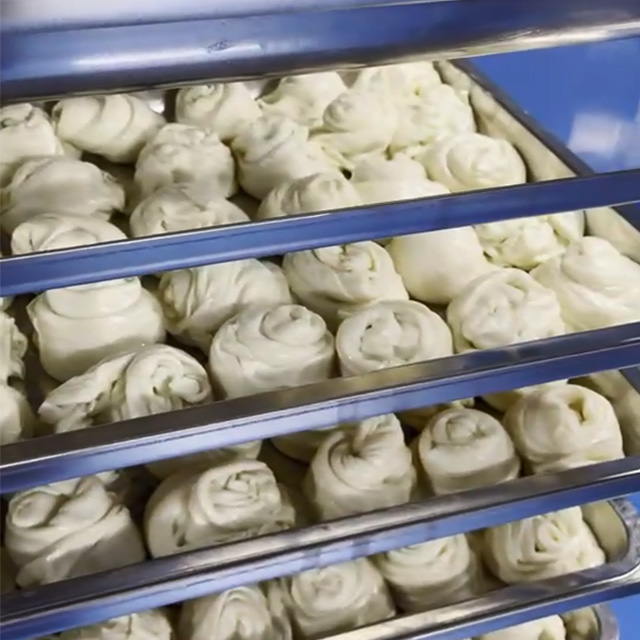
We must evaluate the mechanical precision of a lachha paratha line carefully. Extruding and stretching capabilities define premium flakiness. The industry benchmark is stretching the dough sheet down to 0.8mm. The equipment must achieve this thinness without breaking the sheet. Only specialized rollers can apply the right amount of pressure. They thin the dough gradually across multiple stages.
Next, look at the layering and folding matrix closely. The best folding mechanisms achieve up to 32 discrete layers. These micro-layers trap air and fat effectively inside the bread. They create the optimal crispness consumers expect from lachha parathas. Lesser machines only manage a few folds. This results in a dense, bread-like texture rather than a flaky pastry.
Lubrication keeps the layers separate during baking. Assess the automated oil and ghee feeding systems thoroughly. You need integrated temperature controllers maintaining roughly 40°C. This keeps ghee, butter, or oil blends perfectly liquid. Constant temperatures prevent nozzle blockages during continuous runs. If nozzles clog, you lose layers instantly. Reliable oil distribution ensures consistent quality across every batch.
Pressing precision dictates your product consistency directly. A reliable paratha machine maintains tight weight variances constantly. It should reliably output items between 50g and 130g per piece. Precision stamping prevents underweight rejects and overweight giveaways. You also want easy mold changeovers for different product sizes. Operators should swap pressing molds in minutes, not hours.
Best Practice: Run the oil feeding system 30 minutes before production starts. This ensures uniform 40°C temperatures throughout the pipes.
Common Mistake: Ignoring routine roller calibration. A slight misalignment prevents achieving the crucial 0.8mm thickness, destroying the layer count.
Expanding a product range requires highly versatile equipment. Many brands want to offer authentic "Dhaba Style" or flavored parathas. These specific recipes feature solid ingredients. Popular additions include chopped garlic, mint, green scallions, or chili flakes. You must evaluate how dispensing systems handle these particulate inclusions. Some machines only handle smooth pastes, limiting your product development.
Precision hoppers are essential for this specific task. They distribute inclusions evenly across the 0.8mm dough sheet. They must drop ingredients gently without tearing the fragile dough. Poorly designed hoppers clog the rollers easily. They cause frequent jams and expensive downtime. You need specialized automatic feeders built for dry or slightly moist ingredients. These mechanisms ensure every bite contains the right flavor balance.
Flexibility extends to the dough base itself. Regional recipes vary wildly across different markets. Some use low-oil whole wheat mixtures. Others use high-fat all-purpose flour combinations. A robust layered flatbread line shifts between these recipes seamlessly. It must adapt to homestyle atta bases effortlessly. It should also handle rich Kerala Parotta variations without slipping. We recommend checking roller grip adjustments for different hydration levels.
Best Practice: Always calibrate ingredient hoppers using the exact moisture content of your scallions or garlic.
Common Mistake: Using heavily wet inclusions directly from a wash cycle. This moisture gums up the extrusion rollers and causes immediate dough tearing.
You cannot ignore physical facility constraints during procurement. A true high output line requires careful spatial planning. Equipment providers should offer detailed 2D or DWG layouts initially. Depending on your factory floor, you might need specific configurations. Common options include straight (I-line), L-shaped, or U-shaped continuous lines. You must match the layout to your available square footage precisely.
Implementation realities demand strict environmental and safety zoning. Consider these essential zones for safe operations:
Climate-Controlled Resting Rooms: Isolated areas keep dough temperatures stable during relaxation.
Dedicated Oil-Melting Zones: Separate areas for bulk fat handling prevent slippery floors.
Washdown Corridors: Safe spaces for cleaning parts without risking electrical hazards.
Dry Ingredient Storage: Humidity-controlled sections to keep flour and semolina fresh.
Finally, think about downstream integration requirements. Your primary forming equipment does not operate in isolation. It must sync flawlessly with automated filming machines. It needs to connect to pressing machines seamlessly. It should also feed directly into spiral freezers. This matters immensely for raw-frozen (kacha pakka) storage solutions. Smooth integration eliminates bottlenecks entirely. It also reduces handling damage significantly.
Buying a standalone machine is rarely enough for long-term success. You are investing in a comprehensive production system. Look for vendors offering holistic factory planning services. They should provide expert recipe conversion assistance. Adapting homestyle hydration ratios for machine processing requires deep expertise. Vendors should guide you through these formulation tweaks.
Define your success metrics clearly before purchasing. Calculate returns based on guaranteed output volumes. Most industrial systems yield between 2,100 and 6,300 pieces per hour. Compare this throughput against your current manual labor costs. You also save money through uniform portioning. Better precision means drastically lowered ingredient waste.
Let us look at a typical production scale comparison:
Production Method | Average Hourly Output | Labor Required | Weight Variance |
|---|---|---|---|
Manual Rolling | 200 - 300 pieces | 5 - 8 operators | High (+/- 15g) |
Semi-Automatic | 800 - 1,200 pieces | 3 - 4 operators | Medium (+/- 8g) |
Fully Automated | 2,100 - 6,300 pieces | 1 - 2 operators | Low (+/- 2g) |
Always verify service and compliance credentials thoroughly. Ensure the vendor provides verifiable uptime guarantees. Look for compliance-ready sanitary designs featuring mostly stainless steel. The equipment must allow easy washdowns daily. Localized after-sales maintenance programs are equally critical. They keep your production running smoothly year-round. You need rapid access to spare parts and technical support.
Selecting the right equipment requires a careful balance. You must merge delicate dough mechanics with robust industrial output. Achieving a 0.8mm stretch and 32 layers at scale is a true engineering feat. The machinery must replicate manual artistry flawlessly to satisfy your customers.
We strongly advise demanding real-world testing. Bring your specific flour blends and inclusion ingredients directly to the vendor. Test them thoroughly before finalizing any procurement decisions. Seeing your actual recipe run on the equipment reveals hidden issues instantly.
Start planning your transition today. Compile your facility constraints and exact recipe specifications. Use this data to begin consultative discussions with turnkey equipment providers. Proper preparation guarantees a successful automation journey. It ensures your final product exceeds consumer expectations.
A: Yes, provided the machine features extreme thin-sheeting down to 0.8mm. It must include multi-layer folding capabilities. You also need proper climate-controlled dough resting to relax the gluten fully.
A: High-end lines utilize specialized automatic feeders. These hoppers uniformly distribute dry or slightly moist inclusions across the dough sheet. They do this right before the rolling and folding process. This method prevents tearing and roller jams.
A: Standard electrical and spatial requirements apply. However, facilities should ideally include climate-controlled resting rooms for dough stability. You also need isolated, slip-resistant zones for bulk oil and ghee handling at constant temperatures.


